South Florida Amateur Astronomers Association & The Fox Observatory
SFAAA is a registered non-profit educational amateur astronomy society located in Sunrise, Florida. Membership is open to anyone interested in any area of astronomy. See the Becoming a Member section for more information.
Fox Observatory
Area 51
Fakahatchee Strand
Kirby Storter
Websfaaa.com
SFAAA Newsletters
SFAAA Mar 2010...
SFAAA Feb 2010...
SFAAA Jan 2010...
Top Downloads
Polar Finder 309
SFAAA Observin... 284
SFAAA Membersh... 140

Home
Main Menu
Member Trek to Area51 - March 12, 2010! PDF Print E-mail
Written by Charlie Hein   
Saturday, 02 January 2010 16:57

Hello Folks!

Assuming that the weather will allow it, we invite you to join us on Friday March 12th, 2010 for a Member Trek to Area51.


Gathering at 51

Please note: Traveling out to and observing from dark sky sites involves a small but unavoidable level of inherent danger, and because of this we cannot sponsor guided trips to these sites for the general public. Anyone who goes to one of these places must understand that they do so completely at their own risk because it is simply impossible to completely negate those risks. Although all interested astronomers are certainly welcome to join us at this event, it is not a public event like our Saturday Public Viewing Nights at Fox Observatory.

Read more...


Loose Recticle in your Orion Polar Scope? PDF Print E-mail
Written by Charlie Hein   
Monday, 24 August 2009 20:33

Yes, if you have one of these things, we all do it - sooner or later, we loosen our polar scope recticle too much and it falls out and rolls around inside the polar scope. This makes polar alignment impossible - but it's very easy to fix! The trick is in understanding how the polar scope is put together... let's take it apart for a look.

The polar scope will easily unscrew from the mount. Once it's out, hold it vertically with the "eyepiece" side facing up and the "objective" side facing down, like so:


The "eyepiece" end of the polar scope unscrews. Remove it, and you will expose the loose recticle. At this point you can just empty it out into your hand if you'd like to have a closer look at it, although it's not necessary to completely remove it in order to fix your trouble unless for some reason the glass recticle lens itself has fallen out of its holder. More on this in a bit.

Here's a picture of the recticle itself:


Note that there's a larger "outside" ring that is the "holder" for the glass recticle, and a smaller ring that screws into the larger ring to secure the glass recticle lens in place. In the very unlikely event that this holder assembly has come apart, just drop the glass lens in place as shown and tighten the smaller ring into the larger ring with a small "jewelers" screwdriver until the recticle lens is snugly held in the metal "framework". Be careful not to over tighten the inside ring as you could shatter the recticle glass!

Just so you have an idea of what it looks like, here's a look at the back side of the recticle:


Now, the whole reason we're taking this thing apart in the first place is probably because we loosened one or more of the adjustment screws too much and the recticle assembly fell out as one piece. Fortunately this is an avoidable problem. The recticle is designed with a flange (or slot, or channel - pick the word you like) that will retain the recticle in place if we don't loosen it too much:


If you look down the disassembled polar scope towards the objective, it might look something like this:


In this case, note that one adjustment screw is way out (unscrewed) and one is not. This one screw was loose enough to allow the recticle to just fall right out. Notice that if it had not been loosened so far, the recticle would have still been held in place by the flange. Keep this in mind when you are adjusting the recticle for accurate centering later on.

However, now that the recticle *is* out, it might be prudent to loosen the other two adjustment screws so that they do not extend into the area that the recticle needs to fall into.

These adjustment screws require a 1.5mm allen key, by the way.

Once you've unscrewed the adjustment screws enough to clear the opening, just drop the recticle into the polar scope with this side facing you. Now that nothing is in the way, it should be pretty easy to get it right:


Now, tighten the adjustment screws up until the recticle is roughly centered in the housing. They should be tight enough to hold the recticle firmly in place, but definitely not "cranked down hard"! You could ruin your recticle if you over tighten it in this "holder"!

Once it's in place, it should look something like this:


Now that the recticle is back in its holder, you can thread the "eyepiece" back in, looking through the "eyepiece" and continuing to screw it in until the recticle is in sharp focus. Then just thread the whole polar scope assembly back into the RA axis of your mount. Problem solved!

Once the recticle is re-installed and we have the polar scope re-installed in the mount, we will definitely need to re-align the recticle to the RA axis of the mount. Accuracy is the name of the game at this stage - the more accurately the recticle is aligned, the better your chances are of getting really good polar alignments using the polar scope.

At this point, I could go through a discussion of the whole procedure for accurately lining up your recticle to the RA axis of your mount, but instead I'll direct you to one of the best explanations on the web for how to do this that I've ever found:

Instructions for aligning your polar scope recticle

Good Luck and Clear Skies!


Charlie

 
Learn How to Setup, Align & Use Your Telescope PDF Print E-mail
Written by SFAAA Staff   
Sunday, 30 November 2008 15:22
Bring your Telescope with its accessories and manuals to Fox Astronomical Observatory on Saturday evenings. We’ll teach you to set up and align your telescope and how to find things to look at in the night sky.

It’s a free service of the South Florida Amateur Astronomers Association (SFAAA), operators of Fox Astronomical Observatory at Broward County’s Markham Park.

The Observatory is open to the public Saturdays from Sunset until Midnight.

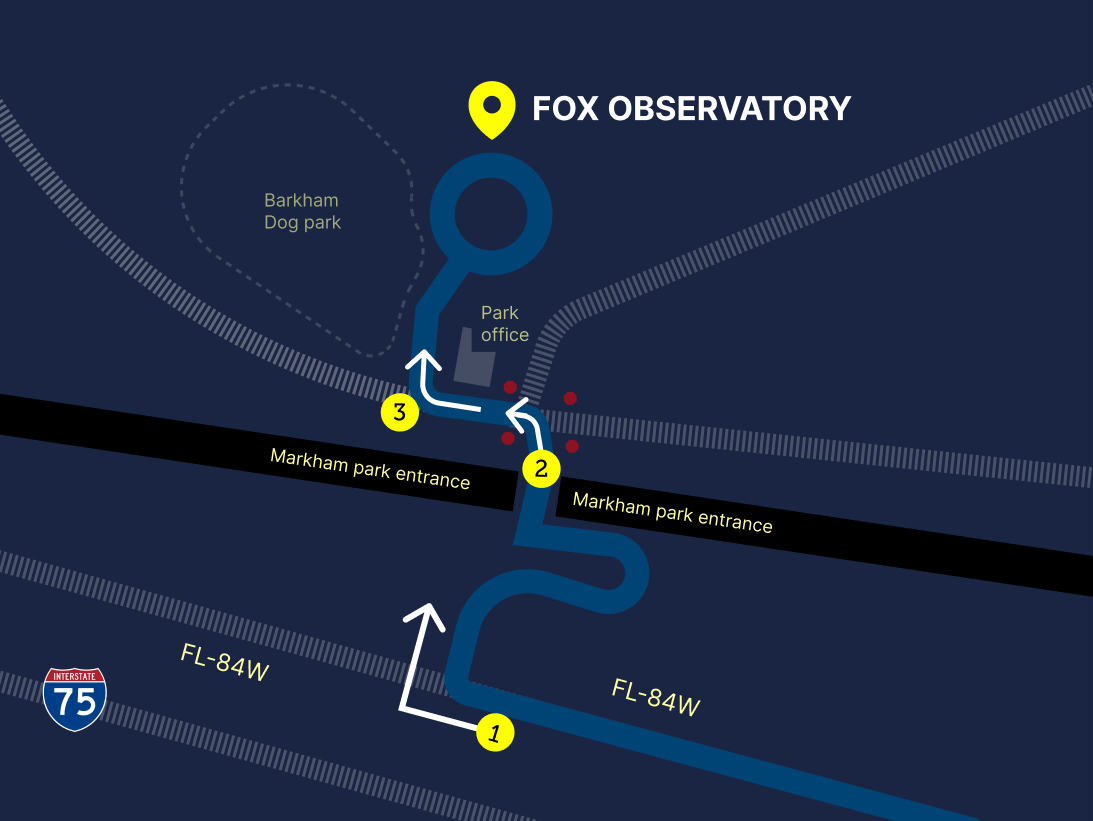
The park is located at 16001 W SR 84 at Weston Rd Sunrise FL 33326. Take I-75 North past the Western end of I-595, take the new Weston Road exit. Turn right at the Weston Road traffic signal. Once in the park at the four-way stop sign turn left, then make your first right, and go to the end of the road. Please dim your headlights.

The SFAAA is a non-profit organization, donations welcome, annual memberships. Members receive monthly e-mail newsletter containing color astronomical pictures taken in South Florida by SFAAA Members!!
 
Looking for Website Content! PDF Print E-mail
Written by Charlie Hein   
Sunday, 09 November 2008 23:00

Hello Folks!

articles.jpg

As you've probably noticed, we've run a little short of fresh content for the club website lately. I'm writing today to make an official request for club members and other interested parties to submit articles for posting on the website. We are looking for product reviews, observing reports, how-to articles or any other type of content that can be posted on the site for our readers to enjoy.

In particular, we would really be interested in seeing articles of a recurring nature, such as an recurring article on what is going to be in the sky for a particular month. If you've always wanted to be a columnist this could be your stepping stone!

Seriously, we can really use your help. You don't have to be a great writer - we will function as your "editor" and make certain that your article is spell checked, factual and easy to read. You do not have to be a web guru at all - we can take your information in many forms (such as a Word document or email) and get it online with no trouble at all. While we would like for you to provide any pictures your article would need (and in the case of a "how-to" or product review it's pretty much essential that you provide some images), we can always use stock photos to dress up your article if you don't have any pictures to share.

What we cannot do without is your input. If you would like to help out in this way, please contact us at info@sfaaa.com, and we'll get back to you to work out the details!

thanks,

Charlie

 
Review of Eva-Dry DeHumidifier PDF Print E-mail
Written by Steve Cox   
Saturday, 27 September 2008 09:08

Eva-Dry High Capacity Dehumidifier Systems.
by Steve Cox
 
The Weapon:
Welcome to South Florida, and the wonderful conditions of moisture that go along with it.  The enemy comes to astronomers in the form of dew. Our equipment takes the punishment night after night. Now there is a new weapon to fight back, behold the Eva-Dry High Capacity Dehumidifier Systems. They come in all shapes and sizes and range in price from $14-$80 each. Their one mission is to remove moisture from our astronomy equipment. Inside these units are thousands of tiny crystals that remain active for 10 years and offer a limited 5 year manufacture warranty.

Eva-Dry Units

Read more...
 
Latest Downloads
SFAAA Mar 2010 New...
SFAAA 2010 Electio...
SFAAA Feb 2010 New...
SFAAA Jan 2010 New...
2010 Rise-Set Tabl...
Voice your Opinion!
Imaging or Visual?
SFAAA Events
Sat, Mar 13th, @7:00pm - 11:59PM
Saturday Night Public Viewing
Sat, Mar 20th, @7:00pm - 11:59PM
Saturday Night Public Viewing

Current Moon Phase
Current Moon Phase
Current Sun Image
Current Sun Image
Image date: 10mar10
From: SpaceWeather